
RICHMOND, March 17 — The 2026 session of the Virginia General Assembly has adjourned, but several of the most consequential decisions facing the Commonwealth are still unresolved.
Most notably, the legislature left Richmond without completing a final two-year state budget. Lawmakers will return later this spring for a special session to resolve the differences between competing spending plans.
What makes the situation unusual is that Democrats control the House of Delegates, the Senate, and the Governor’s office. Even with unified control of state government, they were unable to agree on a final spending plan before adjournment. The disagreement appears to center largely on how much more the state should spend beyond the budget proposed earlier this year by Governor Glenn Youngkin.
That debate matters because the direction of the state budget often tells us a great deal about where Virginia’s policy priorities are heading.
Taxes and affordability were central themes during the legislative session, and the results were telling.
Several proposals aimed at providing tax relief to working families — including repealing the grocery tax, eliminating state taxes on tips and overtime, and reducing the personal property tax on vehicles — were debated, but rejected by the Democratic majority.
At the same time, the Democratic majority adopted new taxes on Virginians, including a new payroll tax to fund a paid family leave program, an 11-percent firearm and ammunition tax, and even a statewide mattress tax.
Even more striking were a number of tax proposals introduced by Democratic lawmakers that would have expanded Virginia’s sales tax to a wide range of everyday services — from haircuts to dog walking. While those proposals did not pass this year, their introduction illustrates the readiness of the new Democratic majority to consider a wide range of new taxes affecting everyday services used by families across Virginia. And the fact that these proposals did not pass as stand-alone legislation does not mean they are gone; they could easily reappear as part of the final budget deal that will be unveiled in the coming weeks.
Energy policy was another major area of debate.
Governor Spanberger and her allies in the General Assembly are returning Virginia to the Regional Greenhouse Gas Initiative (RGGI), a multi-state carbon tax program that requires power producers to purchase emissions allowances. Republicans in the General Assembly — including me — have opposed it because those taxes and the cost of those allowances will be passed on to consumers. It will mean higher electric bills for households and businesses across Virginia.
However, proposals aimed at easing some of the most expensive mandates created by the Virginia Clean Economy Act were rejected.
Another policy change that will significantly affect taxpayers involves collective bargaining for public employees.
In recent years the General Assembly allowed local governments to adopt collective bargaining if they chose. This year lawmakers moved toward making collective bargaining effectively mandatory statewide.
That decision came despite warnings from local officials — including many Democrats — that the policy will substantially increase personnel costs. Fairfax County, for example, is already facing a significant budget deficit, and Richmond officials have reported major increases in labor costs after adopting collective bargaining agreements.
Experience in those jurisdictions provides a clear preview of what will happen if the policy is imposed statewide: personnel costs will rise, and local governments will face increasing pressure to raise property taxes to cover those expenses. Moving forward with a statewide mandate in the face of that experience seems to reflect an aspiration for the triumph of hope over experience.
Second Amendment issues also generated significant debate during the session. Democratic majorities advanced several new restrictions affecting law-abiding gun owners, including limits on magazine capacity, age restrictions on firearm purchases and possession, and new storage mandates. Some proposals even included criminal penalties for leaving a firearm in a vehicle. Supporters argue these measures promote public safety, while many Virginians — including me — believe they impose burdens on responsible gun owners without addressing the root causes of violent crime.
The debate over political representation will also move to center stage in the coming weeks.
On April 21, Virginia voters will decide whether to approve a constitutional amendment that would alter the redistricting framework adopted by voters in 2020. Supporters portray the amendment as a procedural change, but the congressional maps already adopted by the Democratic majority in the General Assembly tell a very different story.
Those maps openly aim to produce a congressional delegation of 10 Democrats and one Republican in a state that is closely divided politically. One proposed district — stretching from parts of the Shenandoah Valley north into Arlington and Falls Church and then back into central Virginia — has drawn particular attention because of its unusual shape.
Maps like these illustrate why many Virginians believe the amendment represents a return to the kind of partisan gerrymandering voters sought to eliminate only a few years ago.
Finally, lawmakers will return to Richmond April 22 for the General Assembly’s veto session, when legislators consider amendments and vetoes from Governor Spanberger. The following day, the legislature is expected to reconvene once again to finalize the state budget.
Although the regular legislative session has ended, the decisions made over the next several weeks will shape Virginia’s economic future, its energy policies, and the balance of political representation in Washington. For that reason, the coming month may prove to be one of the most consequential periods in Virginia politics this year.
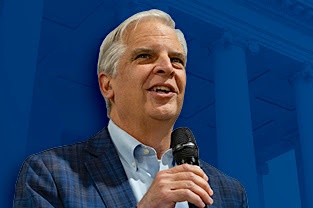
Senator Mark D. Obenshain ~ 2 nd District, Senate of Virginia
Senator Obenshain represents the Second District in the Senate of Virginia. The district includes the city of Harrisonburg and the counties of Rockingham, Page, Highland, Bath and parts of Augusta. He is a member of the Senate Courts of Justice; Commerce & Labor; Agriculture, Conservation, and Natural Resources; and Finance & Appropriations Committees.
•••
RECENT LETTERS
If you are an American first, vote ‘Yes’ on the referendum
Threats against PCDC billboard are a threat to free speech
It’s time for Page County to catch-up on short-term rental regulations
Expiration of ACA subsidies hitting many of our neighbors hard in Page County
‘Thoughtful approach to a very complicated problem’ in short-term rentals
Recent reassessment revives popular Page sport…blaming ‘outsiders’
Impairing local careers and local healthcare
Virginia must stand up to platforms breaking state’s sports betting laws
RELATED ARTICLES

Be the first to comment