
THIS ARTICLE IS COMMENTARY AND PUBLISHED IN OUR EDITORIAL SECTION.
EDA chair declines interview until closing on sale of county-owned land
By Randy Arrington, publisher
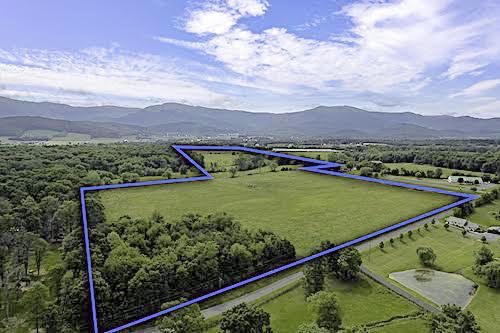
LURAY, Oct. 7 — About two weeks ago, the seven sitting members of the Page County Economic Development Authority (EDA) voted unanimously to accept a bid submitted by Legacy Land Company to purchase 59-plus acres of county-owned land just off Goodrich Road between Luray and Stanley. Since that time, speculation surrounding the Sept. 22 decision has run rampant on social media — and I know this may come as a shock — but some of the information provided on social media is both misleading and flat out incorrect.
During the course of this commentary (editorial), we will attempt to answer some of the questions that we have heard floating around the county. However, some things remain undisclosed, as we discovered when we made our first inquiry on Sept. 24 with the EDA chairman.
“I am going to decline [an interview] at this time because we are not able to discuss all facets of the sale yet. Once we are under contract, we will release information that will be helpful to you and we can answer questions at that time,” stated Melissa “Missie” Deibert, chair of the Page County EDA.
We met with much of the same from several other sources we checked with, but we were able to piece together a few things here and there. We also looked back at the history of this land and the albatross it has been for county government — from failed plans for a data center, to the county reneging on a $6.5 million “moral obligation” that harmed the county’s credit for several years; from previous planned projects at the site, to grossly overpaying for the land; and from the site’s ability to handle future development, to what happened to several grants that were anticipated to help improve the site.
We won’t be able to answer all the questions surrounding this site and its potential future development, but here’s what we have at this point.
Has the land actually been sold?
No. The EDA simply accepted a bid submitted by Maryland-based Legacy Land Company. The EDA accepted the bid with the intention of moving toward a closing on the sale of the property, but that process will likely take a few months at the very least. During this process, EDA members and county officials are not taking questions about the internal workings behind the scenes.
Will the planning commission be involved in the process?
No. The Page County Planning Commission will only become involved if the developer seeks to rezone the land from its current designation as “Industrial.” This could happen after the closing, or more likely (as many developers have done in the past), it could be done prior to the actual closing as a “condition” of the sale. Developers often want to know that they have a clear pathway to develop the land as they wish prior to actually making a seven-figure investment. We confirmed this with County Administrator Amity Moler.
“The only reason anything would go before the [Planning Commission] is if a rezoning of the land is requested. In that case, it would go before the [Planning Commission] and then the [Board of Supervisors],” Moler told PVN through an Oct. 3 email.
Will the Board of Supervisors have final say on the sale of the land?
No. According to the county administrator, “The EDA is the owner of the property. They do not need permission from the [Board of Supervisors] to sell it, but that doesn’t mean there won’t be any conversations about the details or plans.”
Will the community have a chance to weigh-in on the issue prior to closing?
Yes. According to the County Administrator, “The EDA will have to hold a Public Hearing to sell the property, so there will be time for public comment.” Of course, that public hearing has not been scheduled or publicly advertised (as required by law) at this time.
How much was offered to the EDA for the 59-plus acres?
The amount is currently undisclosed. However, we know that the Board of Supervisors had previously put a stipulation on the sale stating that no offer under $1 million should be considered. We also know that the EDA received multiple offers (although we don’t know how many). So, since this is the only offer that the EDA is considering, we can surmise that the offer by Legacy Land Company was the only offer that was at or exceeded $1 million — or they were simply the highest bidder at $1 million or more.
At $1 million (although the offer could be for more), the land would be sold for about $17,000 per acre. When the original proposal was made to purchase the land from Rebecca Hudson in January of 2009, the EDA planned to purchase a 211-acre tract for about $7.5 million — or around $35,000 per acre (and that was 17 years ago, before the housing boom of the last five to seven years). Land previously zoned for agricultural, and worth maybe $4,000 to $5,000 per acre at the time, was suddenly worth seven times that — according to EDA members and an appraiser they hired — after it was rezoned industrial.
Once plans for developing that site began to fall through in 2010 and the county backed out of its “moral obligation” of what was originally called “Project Clover” and later named “Project Braveheart”, the county retained the 59-plus acres for its initial $1 million investment that the Board of Supervisors gave to the EDA for its initial down payment on the 211 acres. The remaining acreage then reverted back to the owner, after the EDA never secured funding for the remaining $6.5 million.
So, the $1 million stipulation placed on the sale of the land by the Board of Supervisors was an effort to get back what the county had already put into the land purchase.
What does the current developer plan to do with the land?
This is not clear, as EDA members remain silent. However, according to several sources, the plans laid out by Legacy Land Company revolves around a potential housing project. It would be pure speculation at this point to say that the proposal focuses on “affordable housing”, “workforce housing”, apartments, single-family homes, small mansions or an entire small community development. Those plans have not been made public and are simply unclear at this time.
Is a data center being proposed for the property?
Although we can not say this definitively, it is highly unlikely. Page County does not have the infrastructure to support modern-day data centers, which require an enormous amount of electrical power and typically a large water source to cool equipment.
However, with that said, David Tong, CEO of Premier Technical Services, originally planned to build a $16.5 million data center at the site that was touted to create 95 new jobs in the county in 2008. A front page photo in the Page News and Courier in May of that year showed Tong grinning and shaking hands with then-supervisor Gerald Cubbage at the Mimslyn Inn, as the board openly welcomed the idea of new employment and additional tax base in the county. That announcement is what sparked the idea for “Project Clover”, which was to create an industrial park at the original 211-acre site, with the data center serving as an initial “anchor” for the larger industrial development.
Tong repeatedly talked of federal contractors backing out of the project and difficulties finding funding, and the data center was delayed time after time. That prompted the Board of Supervisors to pass a resolution on June 1, 2010, to discontinue financial support for Project Clover. On July 24 of that same year, the EDA formally declared in default on the loan to purchase land for Project Clover. However, the project wasn’t completely dead.
In December 2010, Tong announced that funding had come through for the project, groundbreaking was expected for the spring of 2011, and the center could be open within 16 months, according to a story in the Dec. 28, 2010, issue of the Page News and Courier. However, in the fall of 2011, Tong again told the board that “three federal clients” he had hoped to secure for the data center backed out of the project because of lack of funding.
That news prompted VDOT to rescind a $250,000 grant that was to be used to construct a connecting roadway to the project, and a promised $700,000 grant from the state that would have paid for an extension of Stanley’s water and sewer service to the site — as well as the construction of a new well for Stanley’s system — also disappeared. The Governor’s Opportunity Grant of $300,000 was the only funding still available.
After four years of waiting for something to develop, the board of supervisors cut the last string on April 17, 2012, when they voted 4-2 to not extend the timeline on the $300,000 state grant. Noting that the $300,000 was given to Premier Tecnical Services in 2008 by a former Economic Development Authority board pending groundbreaking for the data center, District 5 Supervisor Jeff Vaughan, who made the motion, said “that money never should have been given to them, and it was supposed to be based upon performance.”
By that time, the facility was being listed as a down-graded $1.3 million data center that was supposed to be under construction with at least five jobs created before the grant could be given to Premier. However, the county EDA had already given Tong the money. When efforts began to get the money back (since the project never happened), the state insisted it was the county’s responsibility and there was no obligation to pay it back to the state. The county insisted that sinece it was state funds, it was the state’s responsibility. Nothing was ever done, and Tong never repaid the $300,000.
In addition, grants earmarked to help Stanley pay for its new well — Well No. 7 — were withdrawn, and future promises by the county to help pay the cost of finishing that well were never fulfilled. According to Stanley Town Manager Terry Pettit, former Supervisor J.D. Cave did make a subsequent motion in March of 2015 to give the Town the general warranty deed to Well No. 7 and its equipment, as well as a surrounding 1-acre lot, even though Stanley had started the project well before Project Clover was even a concept.
Is there infrastructure in place at the site to support a housing project?
It depends on the size of the project. Pettit has a goal of having Well No. 7 operational by Jan. 1, 2026. There are a few “punch list” items that still need to be done, but once the well is fully online it will bring closure to a project that dates back more than a quarter century.
Ron Wilson was serving as the county administrator before the turn of the millennium when concerns were first raised about possible contamination in Stanley’s Well No. 2 and Well No. 3 along Eldon Yates Drive near the old Stanley Landfill. So plans began to drill a new well north of Stanley. Future testing and monitoring would show that those two wells were not contaminated, and they are still in use today. However, after Well No. 7 was first drilled in 2007 on property owned by the EDA, the state grants associated with Project Clover in 2008 were supposed to help complete the project — but they went away and things were put on hold. Several efforts were made to revive the project, as pieces of the process inched along, but the Town never had the funds to complete it until ARPA funds arrived in the wake of the COVID-19 pandemic.
When Well No. 7 officially goes online in January (or sooner), it will produce 380 gallons of water per minute. It sits in a field across from the Page County Animal Shelter, and the Town has invested more than $800,000 in developing the well and getting lines run to it.
The Town of Stanley also has sewer service in the area, “but there would have to be some upgrades,” especially to one pump station, in order to serve a housing development, according to Pettit.
“Single-family homes, that would not be a problem,” Pettit told PVN, “but multi-family apartments in large numbers… that would be a problem.”
Why hasn’t the EDA sold the land until now?
Mainly due to cost. The county so grossly overpaid for the land back in 2008, that it took until now for the real estate market (and potential buyers) to catch up. When Project Clover flopped and the EDA was stuck with the 59-plus acres, they tried to sell it multiple times — often at a very high price.
When a successful cable TV executive from Northern Virginia bought a five-acre property on Goodrich Road more than a decade ago, he needed a 10-car garage to support his automobile hobby. Phil Rainwater then got an idea in 2013 to open a niche internet car dealership and he knew the county had land for sale just across the road. Rainwater approached the EDA about purchasing 21 undeveloped acres in three parcels of what was once supposed to be part of an industrial park known as Project Clover — only now it went by the name of Page County Technology Park. The EDA’s asking price…almost $1 million for less than half of the acreage they owned at the site, or…$47,447 per acre.
Rainwater found the offer “insulting” and walked away, as did many other potential buyers for the next decade. Now that the housing boom fueled in part by the pandemic has raised the price of homes and real estate, the EDA’s asking price of at least $1 million for nearly 60 acres seems more appropriate. The average sold price of a home in Page County has doubled since 2018.
In addition, the site was also eyed by a company called Fibrowatt in the years following the Project Clover collapse. However, the concept of a large smokestack in the middle of the scenic Page Valley for a company that would be burning chicken litter to produce energy was too much for residents to stomach. Strong resistence by citizens shut the project down before it got started, despite some benefits for local poultry growers.
Why did the EDA pay so much for the land originally?
They said the value of the land was $35,000 an acre, and they found an appraiser to agree…but only after the fact. The original purchase was made without a professional site appraisal.
The sale price appeared to be grossly high and gave rise to public outcry. In response to this outcry, a private citizen paid Colonial Appraisal for an appraisal in May 2010. This appraisal concluded that the price should have been $12,000 per acre.
Embarrassed, the EDA decided to have an appraisal performed to reaffirm the $35,000 per acre price. This EDA appraisal, completed by Appraisal USA in June 2010, concluded that the price should be $37,000 per acre.
Two comparison sites, one from each of the appraisals, are of interest.
In the EDA/Appraisal USA document: the Acorn Road site in Harrisonburg was 94 acres of level, open land, bordered by wide, marked, asphalt streets and within two miles of US 42, US 11, US 33, I-81, JMU, EMU, N&S RR, the Rockingham Research Park and comparison-priced at $34,000 per acre. This was an exceptional industrial site, in what was at the time, one of the fastest-growing cities in Virginia.
From the independent, citizen-based/Colonial appraisal: in Harrisonburg on Kratzburg Road, 87 acres comparison-priced at $18,500 per acre. This site is north of, and on the same road as the Acorn site and has similar, but more distant, access to the same entities. It also has railroad frontage.
By comparison, the Project Clover site had railroad frontage, is 20 miles from I-81 over a mountain pass, 35 miles from Harrisonburg, JMU, EMU and the research park. Now ask yourself, would any business select the isolated Clover site, priced at $37,000 per acre, over the Acorn site for $34,000 per acre, or the Kratzburg site for $18,500 per acre?
The Colonial Appraisal price of $12,000 per acre was realistic.
Could the land go back to its original agricultural use?
Probably not. While some have thought this due to confusion over the potential developer, the land is worth more if developed in some other way (such as housing) rather than being used for agriculture. That makes it hard to believe that it will be bought for farmland, which would also require a rezoning from its current designation as “industrial.” In addition, improvements have been made and infrastructure is available for residential development.
This rumor was likely launched by potential misinformation on social media tracking the name “Legacy Land Co” to “a nationally recognized real estate company that specializes in selling farms, hunting properties and recreational properties” based in Illinois. While Page County’s scenic landscape and tourism-based economy would make this option seem plausible, several sources have indicated that the developer who submitted a bid on the Goodrich Road property is based in Maryland. We have been unable to confirm that, or find a direct matching webpage.
•••
RELATED ARTICLES

Randy, I really want to thank you for following this story over all these years. I hope our local leaders can learn from these huge past financial mistakes that set our county back for decades. The landfill boondoggle is another example.
Your editorial lays out all the facts. A series a very bad expensive decisions.
The EDA was created by a previous Board of Supervisors.
The present Board should abolish it.
It is entirely unaccountable to citizens and elected officials.
Abolish it, return the money from this land sale to the County general fund.
Let County economic development employees and the Board of Supervisors decide where the people’s money should be spent.
Unaccountable government is bad government.