
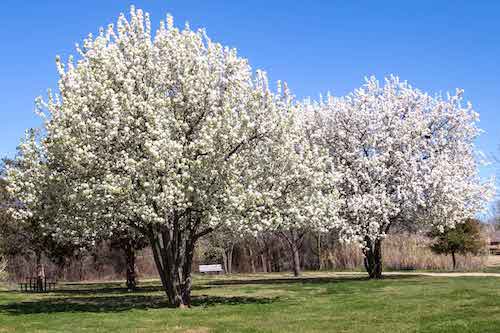
~ Provided by the Virginia Farm Bureau Federation
RICHMOND, July 23 — New legislation establishes penalties for invasive plants sold in Virginia. Retailers, landscapers and contractors who fail to provide written notification to property owners when installing invasive plants are guilty of a Class 1 misdemeanor and face civil penalties.
Gov. Abigail Spanberger signed into law a bill that establishes escalating civil penalties for businessmen who install plants the Virginia Department of Conservation and Recreation lists as invasive. Penalties range from $250 for a first violation, $500 for a second one, and up to $1,000 for each subsequent violation.
Invasive species can spread beyond private landscapes and into natural and agricultural areas—disrupting ecosystems, harming farmland and economies.
According to the Virginia Invasive Species Working Group, they cost Virginians over $1 billion annually in crop losses, forest damage, control efforts and impacts to recreation and infrastructure.
But state organizations, task forces and local groups are fighting back. Residents can join the cause by reporting sightings that help limit their spread.
When spotting a potential invader, Kevin Heffernan, the Virginia Department of Conservation and Recreation Natural Heritage invasive species coordinator, said to look for organisms that “don’t play nice with others.
“When you see one species taking over an area and pushing everything else out, that’s a strong sign it’s invasive,” he noted.
Heffernan explained that invasive plants like wavyleaf grass, Japanese stiltgrass, fountain grass and Callery pear—commonly known as Bradford pear—are expanding rapidly and overwhelming landscapes.
“Invasive plants are creating monocultures with little value and nutrition for pollinators and birds,” he explained.
Japanese stiltgrass thrives in disturbed soils and forest understories, forming dense mats that suppress native plants and wildlife habitat while wavyleaf grass spreads along roadsides and forest edges, displacing grasses and seedlings. Callery, or Bradford, pear and fountain grass were originally introduced as ornamentals and escaped cultivation to dominate roadsides and landscapes.
Aquatic invasive plants also are spreading, Heffernan added. Steadily proliferating in ponds, lakes and streams, two-horned trapa disrupts aquatic ecosystems and inhibits boating, fishing and other recreation.
“The first ingredient to managing invasive species is commitment,” he commented. “We like to say, ‘Pull invasive weeds, plant native seeds.’”
The DCR recommends the following methods to help control invasive plants:
- Regularly mow or pull invasive plants before they produce seed.
- For large infestations, apply herbicides carefully according to label instructions.
- Report sightings of two-horned trapa.
- Wear gloves when handling two-horned trapa due to barbs.
- Choose native plants and grasses when landscaping and gardening.
- Explore tree exchange programs. The Virginia Department of Forestry facilitates replacing Bradford pears with native varieties.
Read more in Virginia Farm Bureau’s spring issue of Cultivate magazine.
•••
RELATED ARTICLES

I’ve heard of previous programs that would give a homeowner a “friendly” replacement tree if a homeowner removed a Callery. Anyone know if that’s still possible and what agency would offer such?
https://dof.virginia.gov/forest-management-health/forest-health/financial-assistance-program/callery-pear-exchange-program/
yes that program still happens: “This program encourages the removal of invasive Callery pear trees by providing Virginia landowners with a replacement native tree. One native tree in a 2-gallon pot will be provided for every Callery pear that has been removed, with a limit of three (3) trees per household. Preregistration is required as a limited number of trees will be available.”
I think this only happens in early spring. Keep checking the link above.
Thank you Dylan.