
~ Press release provided by Virginia Farm Bureau Federation
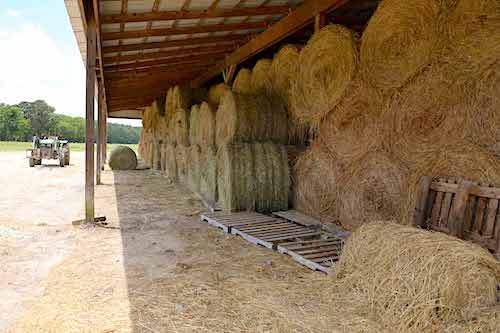
RICHMOND, Sept. 17 — Farmers facing a shortage of critical hay to feed their livestock got some relief when Gov. Abigail Spanberger declared a state of emergency Sept. 16.
Spanberger’s Executive Order 21 allows hay to be transported quickly and efficiently to farms across the commonwealth by granting over-width exemption waivers to carriers transporting essential agricultural supplies of hay in any part of Virginia — accelerating feed delivery to farms and livestock producers. These waivers will help make sure farms can maintain operations and protect livestock health as persistent drought conditions have caused a statewide hay shortfall of 500,000 tons — or approximately 1 billion pounds. The declaration also provides access to emergency funding, activates price gouging protections, and authorizes additional measures if necessary.
“This waiver will be instrumental in helping producers transport as much hay as possible in a timely manner to address the ongoing shortages due to severe drought conditions,” said Virginia Farm Bureau President Scott Sink. “We are grateful for the governor’s attention to this critical matter that is causing significant economic harm to Virginia’s farmers.”
Spanberger said she took the measure because “the drought has placed real pressure on livestock producers across Virginia. While we have seen improvement in drought conditions in some areas of the commonwealth in recent weeks, the impacts of this prolonged dry period are still being felt by producers across Virginia.”
Persistent dry conditions have strained pastures, reduced forage yields and forced some farmers to begin feeding winter hay months ahead of schedule. In September, Virginia Cooperative Extension estimated statewide hay yields were down 35 percent, with some losses reaching 70 percent. By early summer, some farmers had already fed hay for at least 30 of the first 90 grazing-season days because pasture growth had stalled.
Augusta County sheep farmer Morgan Slaven told the story of this fall’s hay season in numbers. She said 2024’s first cutting was 305 rounds bales, in 2025 it was 155 and this year in July, the first cutting was only 31 round bales.
“There are a few variables this year, like more sheep and about 10 fewer acres in hay production — mostly because it wasn’t worth the cost to run equipment over it,” Slaven said. “But to have a crop be only 10 percent of what it was two years ago is scary.”
Farmers need supplemental deliveries of hay in preparation for the winter feeding season to prevent further losses. While the temporary emergency allowance will allow for over-width loads, gross and axle weight limits remain strictly in effect.
The Virginia Emergency Support Team and Drought Monitoring Task Force, which includes the Virginia Department of Agriculture and Consumer Services and other state agencies and state and national weather-related groups, continues to actively monitor statewide drought conditions, and coordinate with affected localities and stakeholders. The state of emergency declaration allows state agencies to streamline support, implement emergency plans, and issue temporary regulatory waivers needed to expedite relief.
The executive order remains in force for 45 days unless amended or rescinded. The over-width waiver will go into effect on Oct. 1 and will remain in force for 30 days. The 15-day period between the start of the executive order and the beginning of the over-width waiver will allow farmers time to source hay and transportation in order to maximize their use of the state-issued emergency waiver, which federal regulations limit to 30 days.
For updates on hay resources and waiver-related information, visit the Virginia Department of Agriculture and Consumer Services webpage for Disaster Recovery Resources for Virginia Farmers.
For drought-related resources for farmers,
visit Farm Bureau’s drought-related hay resources page.
•••
RELATED ARTICLES
Expanded testing facilities to help livestock producers
Farm Bureau warns increased beef imports could harm Virginia cattle herd recovery
Additional 40 Virginia localities receive USDA drought disaster designations
Help stop the spread of invasive plants in Virginia
Fifty-nine Virginia counties designated natural disaster areas; eligible for assistance

Be the first to comment