
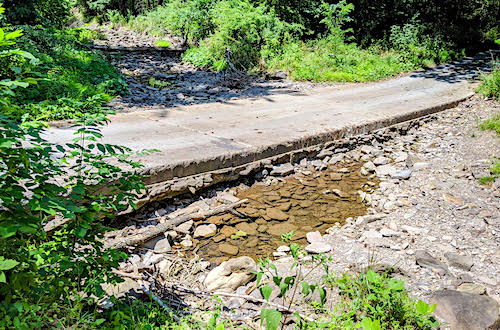
Page County, and most of Virginia, continues to be in severe drought stage
By Dylan Cooper, Outdoor columnist
Have you noticed the spring peepers and toads being not so loud and abundant this spring? Or how about driving across White House bridge and seeing gin clear water below with rocks sticking out like it’s late summer whereas it’s usually high and brown this time of year? And if you’ve trout fished anywhere in the area this year, you’ve probably noticed fishing holes are quite a bit smaller and shallower. Grasses aren’t as lush. Mowings are later and less frequent. The ground is hard. Spring planting hasn’t been good for many gardeners and farmers who are already praying for rain just to start the growing season.
This week, all of Page County, and most of Virginia, continues to be in a severe drought stage. We aren’t hurting as bad as the rest of the Southeast, which has caused wildfires around southern Georgia to the tune of 50,000 acres burned in total so far. The Mountain West region has also pushed into the upper drought stages, except Death Valley which is having its first superbloom in a decade thanks to a whopping two inches of winter rainfall. Pretty much just the Great Lakes/Midwest region seems to be the only parts of the U.S. receiving normal rainfall. More than 60 percent of the country is covered by drought and worsening. That is approaching Dust Bowl levels which peaked in 1934 with over 80 percent of the U.S. in drought. What in the world is going on?
It’s now May, a time of year when our annual hydrologic cycle should be peaking, while recharging the groundwater, streams, and soils for a long summer ahead. Our typical April showers were very few and far between this year as we had 2 inches less than normal fall for the month, which of course worsened the drought even more. We are down 7.6 inches over the last half a year. And I’ve seen estimates that show 18 inches over the next three months is what it would take to completely lift us out of this drought. DEQ and many towns are already asking for voluntary reduction of water use during this drought warning declaration. Most of Virginia’s gauged streams are breaking record low flow levels every day. That is crazy.
This is looking to be our third year in a row of drought conditions in Page County, though it was not completely contiguous. Does anyone else recall what weather craziness happened last year at this time? Last spring, we were looking like we would have the same drought conditions right up until mid-May and then boom, we were seeing huge storms (though spotty), and even some massive localized flooding, right through the end of June. Then it was like someone turned the rain switch off again. I saw some streams in the area last June that had floods bigger than the 1996 or 1985 floods, which are the previous high water marks on record. The problem is those heavy and fast storms may add a lot to the totals on paper, but when it comes all at once, it runs off a lot more and does very little for long term recharge compared to a ‘normal’ rain season.
The last dry spell we had close to this was 1998-2002, which had peaked with 39 percent of the U.S. in drought and Virginia had a state of emergency declared. August ‘01 to July ‘02 was the driest on record for VA, NC, SC, and GA. From that we saw a lot of impacts on wildlife, recreation, and farming back then that we could expect this time too. Brook trout were extirpated from many streams that couldn’t keep water in them. Farmers had to siphon off water to irrigate crops from already drastically low streams. Canoe companies had to shorten or cancel trips based on where the river was floatable. VDH issued over 4000 well replacement permits for so many were going dry. Just think about how many more wells have tapped our precious groundwater resources in the quarter century since then. Studies are showing a moderate decline and minimum streamflow and well water levels over the past 22 years.
Low river flows due to drought can also be dangerous for when there are accidental spills, because there is less water to dilute a potential contaminant, and slower velocities mean it can stay concentrated longer potentially harming wildlife even more. Wouldn’t you know that some of the worst spills we’ve ever seen in this region happened just this winter?
On January 19, during our extreme cold spell of the winter (when most of us were stuck at home with snowcrete), a large 72-inch sewage pipeline, called the Potomac Interceptor, ruptured and overflowed into the C&O Canal and then into the Potomac River upstream of D.C. The estimates vary, but as much as 300 million gallons of untreated, raw sewage spilled into the river, which now sits at the top of the America’s Most Endangered Rivers list. The line contained sewage mostly from northern Virginia, being piped under the river, down through Maryland’s side (where the spill occurred), to end up at D.C.’s Blue Plains wastewater treatment plant and it is operated by D.C. Water. With so many parties involved, there was plenty of blame to go around and it did. The pipe was 60 years old, past its 50-year design life, and had many reported issues for years that were not being taken care of. I myself have seen aging pipes that don’t have the proper bedding, support, and flexibility that then suddenly break during periods of drought when the soils shrink away from them. This pipe here also seemed to have some very large rock get stuck inside the pipe somehow inexplicably.
When the sewage discharge happened, unfortunately the river flow was extremely low due to the ongoing drought and cold spell. I did some estimations to find that the flow of the sewage (reportedly 60 MGD) was about 3 percent of the total river flow at USGS gage at Little Falls at that initial break time (1900 MGD) but the river continued to drop down. By January 24, when the bypass was completed to stop the flow of sewage to the river, the river flow rate was 617MGD, so the sewage was about 10 percent of the river flow.
Luckily, downstream most of the tidal Potomac was iced over so recreation exposure wasn’t much of an issue unless you were in that short piece upstream of the tidal influence up to the site of the break. The spill happened to be downstream of all the largest drinking water intakes on the river, so it did not jeopardize the drinking water supplied to much of Virginia, Maryland, and D.C.’s residents. This was extremely lucky because the sewage spill was causing E. coli bacteria levels to test up to 12,000 times the safety limit for freshwater.
And in January through March another spill happened at Joint Base Andrews of approximately 22,000-32,000 gallons of jet fuel into Piscataway Creek,which flows into the Potomac River below Fort Washington. It was discovered March 23 and wasn’t fully reported to the Maryland Department of the Environment until April 8. Yikes. Besides the public advisories on swimming, boating, or eating fish, I have not heard of any fish kills or other impacts resulting from this spill. It does though certainly add to the ongoing PFAS (“forever chemicals”) problem the Potomac suffers from.
Speaking of the Potomac watershed, did you know it’s now the data center capital of the world? What’s that got to do with water you say? Let’s take a brief look at the data centers existing and proposed in Virginia (currently about 600 to 700 facilities, 1,000-plus proposed). Each of those data centers is going to need millions of gallons of water (each one uses as much water as a small town) for cooling those massive computers (to store our data they are collecting), as well as the indirect water used though the power generation (more water use, pollution, greenhouse gases, etc.) needed to fuel those data centers (one data center uses as much power as much as 100,000-plus households). The land they take up (Loudoun County alone has 50 million square feet of these already) is no longer receiving groundwater recharge (because there’s a concrete monolith sitting taking up the ground), most of that rainwater that would normally fall there now gets piped to stormwater facilities (think man-made ponds or underground storage tanks) where it gets slowly released to downstream receiving waters. Also think about the additional heat generation (heat island effect) from both the data centers and their required power generation. The big data companies know all of this is going to be an unpopular quagmire (temporary job creation vs. long term job elimination by AI) and they’ve gotten out ahead of the water issue by wanting to do enough water replenishment or ‘volumetric benefit’ projects to offset their water footprint. Many of these projects they want to fund are things like irrigation efficiency, regenerative ag, and wetland restoration (A.K.A. things folks should already be doing or are already doing), but Google gets to take credit for them by funding them. Water ‘savings’ do not translate between watersheds. Anyways, I think the future looks bleak for this region’s rivers and groundwater tables. Hopefully we stay a bit locally isolated from this data center issue in Page County.
Is there anything on the horizon to save us from this drought? A prediction by the USGS in VA that looks at winter river levels says there’s a 10 to 20 percent chance of hydrologic drought for our area this summer. As for rain, I really dislike making long-term weather predictions so I’ll leave that to the experts at NOAA who currently say that we have a 60 percent chance of getting an El Nino pattern this summer, which is driven by above-average sea surface temps off of the western coast of South America.
A strong El Nino event is what broke the 2002 drought. For us, El Nino could mean more late summer thunderstorms, but less chance of Atlantic hurricanes in the fall, and then hopefully a wetter winter ‘26-’27. So perhaps this time next year we will be singing a different tune, one in harmony with the melodious spring peepers and American toads that make it till then.
Dylan Cooper is a Page County native and graduate of Luray High School and Virginia Tech. He is a stream restoration specialist and a registered professional engineer in the State of Virginia. An avid outdoorsman and ardent environmentalist, he currently resides in Luray with his family.
Email: currentsolutionsva@gmail.com
•••
PREVIOUS “Nature Notebook” Columns
Nature Notebook ~ Water we gonna do now? Part II
Nature Notebook ~ How to get scammed by a Waterfowl Guide
Nature Notebook ~ Water we gonna do now? Part I
Nature Notebook: Rallying for the rivers
Nature Notebook: Take a kid outdoors
Nature Notebook: The wild ride of 2022 is over
Nature Notebook: Oh deer! We’ve got a problem to bear
Nature Notebook: How to fish like a tourist
Nature Notebook: My EV experience
Nature Notebook: Falling Feathers at Fulfillment Farms
Nature Notebook: Early seasons slip-ups and successes
Nature Notebook: The Tommy Harris Buck
Nature Notebook: The summer smallmouth smorgasboard
Nature Notebook: Fishing the Cicada Invasion
Nature Notebook: The Next Generation
Nature Notebook: Near-record deer season in Page Co.; upcoming kids’ opportunities
Nature Notebook: Climate Report – One for the Ice Ages
Nature Notebook: Climate Report – A Look at 2020 Data

Extremely informative and an excellent analysis.
“Everybody talks about the weather, but nobody ever does anything about it.” Charles Dudley Warner, a writer and friend of Mark Twain, in an 1897 Hartford Courant editorial.
Someone should calculate how much water is stored in resivors municipal holding tanks and water lines and water heater tanks and swimming pools…that might explain the drop in the water table and drought conditions…maybe 🤔