
~ Press release provided by Virginia Farm Bureau Federation
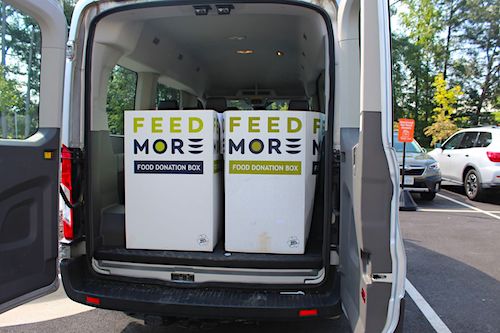
RICHMOND, Oct. 15—Virginia farmers can help stock food banks with fresh, locally produced food — and receive a state income tax credit for doing it — through the commonwealth’s Food Donation Tax Credit program.
The program offers qualifying farmers a credit equal to 50 percent of the fair market value of food crops or wholesome food they grow or produce and donate to a nonprofit food bank in Virginia. The credit is limited to $10,000 per taxpayer each year, and unused credit may be carried forward for up to five years.
For food banks, those donations can bring a welcome variety of nutritious, Virginia-grown produce and proteins. For producers, the tax credit creates an incentive to redirect surplus, cosmetically imperfect or otherwise unmarketable food to Virginia families rather than let it go to waste.
Veterinarian Dr. Melinda McCall, a Louisa County Farm Bureau member, has seen that need firsthand in her own community, where volunteers coordinated a summer “church-to-church 10-gallon challenge.” Participating congregations donated milk to the local food bank, with some churches contributing as many as 500 gallons.
“We staggered the milk donations to ensure a steady supply every week through the summer because that’s when the kids are out of school,” she said.
Food bank response was enthusiastic.
“As fast as you guys bring it in,” they told her, “That’s as fast as we send it out the door.”
McCall said many individuals may not realize that fresh food can be donated or that a tax benefit may be available. Greater awareness, she said, could help food banks secure more fresh choices while giving farmers a practical way to support their neighbors.
Farms to Food Banks coordinator with the Federation of Virginia Food Banks Norm Gold said some growers may not use the tax credit because they assume the process is burdensome or complicated. But the forms are straightforward.
“And either the local food bank or I can help with the paperwork,” he added.
Gold said broader awareness and hands-on assistance could make the credit easier to use while helping farmers offset rising diesel and fertilizer costs and supplying food banks with fresh, healthy food.
He will be visiting stakeholders statewide to promote the tax credit.
“Our goal is to support the local growers and hubs,” Gold said. “This program is a win-win-win for farmers, agricultural economies and people in need.”
To claim the credit, a donor must obtain Form FCD-2, Virginia Food Donation Certification, from the receiving nonprofit food bank within 30 days of the donation. The donor then submits Form FCD-1 and supporting documentation to the Virginia Department of Taxation by Feb. 1 following the year in which the donation was made. Credits are subject to a statewide annual cap of $250,000.
Interested producers should contact a nearby nonprofit food bank before harvesting or delivering food to confirm its needs, storage capacity and documentation process.
For program assistance, contact
Gold at ngold@vafoodbanks.org or 804-677-9034,
or visit vafoodbanks.org.
•••
RELATED ARTICLES
September proves to be driest month of 2026
Virginia corn growers urged to stay vigilant against emerging fungal disease
State of emergency declared to help farmers affected by statewide hay shortage
Expanded testing facilities to help livestock producers
Farm Bureau warns increased beef imports could harm Virginia cattle herd recovery
Additional 40 Virginia localities receive USDA drought disaster designations
Fifty-nine Virginia counties designated natural disaster areas; eligible for assistance

Be the first to comment